
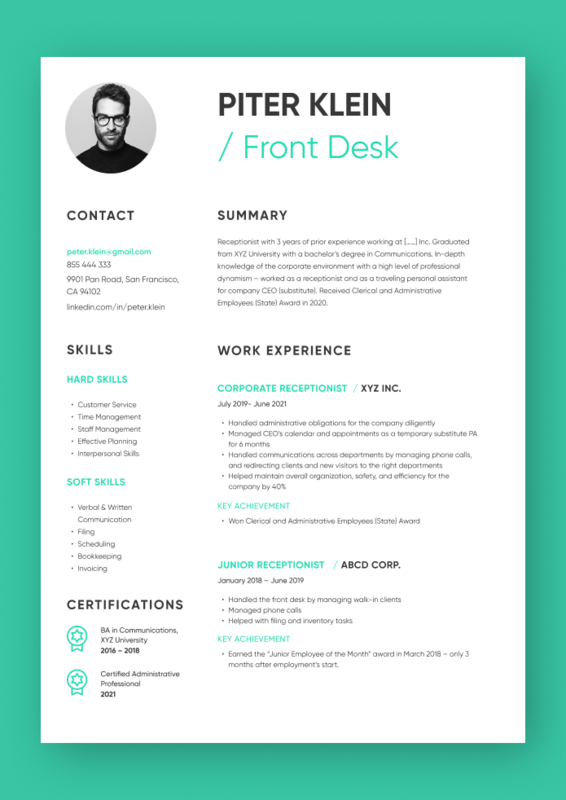
Still sending a basic résumé that only lists the jobs?
The file is short. The jobs are there. A stranger still cannot see the week. Here is what a first screen has to do.
You searched for basic because the page looks small
You did not sit down hoping for another menu of résumé packages.
You sat down because a role fitted, and the document you have is short. Casual work. A degree. A placement. A year in a shop or a ward. You typed affordable basic résumé writing because that is how the problem feels: tidy the file, keep it simple, send it before the closing date.
The problem is usually not the length. It is a first screen that only proves you showed up.
I see this a lot. Students, graduates, people changing field, people who have been in one ordinary job and now need the next one. The titles are there. The dates are there. The opening could belong to anyone who has ever had a casual role.
You are not short of work. You are short of a page that names what happened when you did it.
What they can see without scrolling
Open page one as if it belonged to someone else.
A mobile that rings. An email you will see. Suburb, state and postcode. That is enough in Australia.
Does the opening name the work you can actually do? Two or three sentences. Not "motivated graduate seeking an opportunity to grow." That sentence could sit on anyone leaving a course. Name the field, the kind of work, and one piece of evidence you would be willing to talk about in a room.
If the thing that makes you right for this ad is a placement, a project, a ticket, or a stretch of caring, it has to live near the top. If it is on page two, many readers will not meet it.
You are not writing a memoir. You are making the first screen recognisable as a person who could do the job they advertised.
Duties prove you were rostered
Basic files fill up with copied duty lists. Assisted customers. Supported the team. Responsible for opening and closing. The verbs are tidy. They prove you had a shift.
They do not prove what changed.
You do not need a number for every line. You do need one or two outcomes you would be willing to talk about. A queue that stopped backing up. A roster that still ran when two people were off. A project that actually finished.
If you have a figure you would be calm repeating, use it. If you do not, a plain result is cleaner. Invented percentages have a way of coming up later.
Write the Tuesday. Then add the language of the ad where it is true. Retail, hospitality, warehousing, caring, a student association, a family business: that is work if you write what you actually did. Calling it basic and leaving it as a title and a date is how a stranger decides you have not done anything yet.
A short history is not a reason to pad
A graduate page can lead with the degree, the relevant subjects, the placement. It does not need a hobbies section to look longer, or a skills box that repeats the vacancy.
If you have two roles and a project, write those properly. Do not invent a consultancy. Do not stretch a weekend of volunteering into a career chapter.
Dates have to be ones a stranger can follow. If there is a gap, one ordinary label: study, parental leave, carer, contract ended, relocation. Then back to the work.
Most Australian commercial résumés at this stage sit around one or two pages. A third is rarely earned when the history is short. A functional file that hides the timeline makes people nervous. They start inventing a story. It is rarely the kind one.
The next job is not the last title
If you want a first professional role in the field you studied, the page has to stop describing you only as the casual job you used to pay rent. Put the placement, the tools, the kind of problem you already touched, near the top.
If you want a different field, name the new direction in the profile so a stranger does not have to guess. Put the transferable evidence up. Leave the jargon that only made sense in the last workplace.
If the role needs a licence, a registration, a white card, or a named tool, put it where a reader can see it. Mining, IT and healthcare ads are blunt about that.
One version sent to every kind of ad will keep hoping the reader does the translation. They will not.
What the software is doing, and what it is not
Applicant tracking systems pull text out of a file and look for a match with the vacancy. They are not a personality test.
Text sitting inside images, unusual fonts, and tables can arrive as noise. Ordinary headings. A single column. A .docx if the portal is fussy.
If the language of the ad is true of your week, it should appear in a real sentence near the top, and again where you did the work. If it is not true, do not put it in. I will not quote a pass rate. A file a human can read is usually a file the software can read.
If the ad also asked for selection criteria
Graduate programs, APS, state, council and university roles often want a statement as well as the résumé. One story per criterion. A scene they can picture. The résumé and the statement have to sound like the same person. If you have not got a paid example, use the placement, the group project, the volunteer shift.
You do not owe anyone a purchase
You are allowed to write your own life. Plenty of people write their own first proper résumé and get the conversation.
Help starts to earn its keep when you cannot see the page anymore. The opening could belong to anyone leaving a course. The only evidence of the field is on page two. The applications have gone out and the inbox has stayed ordinary.
A useful service will talk to you. They will ask about the role, not only the file. They will write in a voice you can stand beside in an interview, and tell you what they will not put on the page. If they cannot explain how they work, keep looking. You are not buying a package name.
A calm next step
If you want a personalised look at the file, send it through. Say the kind of role you are applying for, and whether the history is short, changing field, or sitting next to a set of criteria.
I will tell you what the page is currently saying, and whether you can fix it yourself. Sometimes it is the first screen. Sometimes the casual work needs to stop hiding the evidence.
You do not need a lecture on why a first résumé still has to do a job. You already know that. That is why the file is still open.